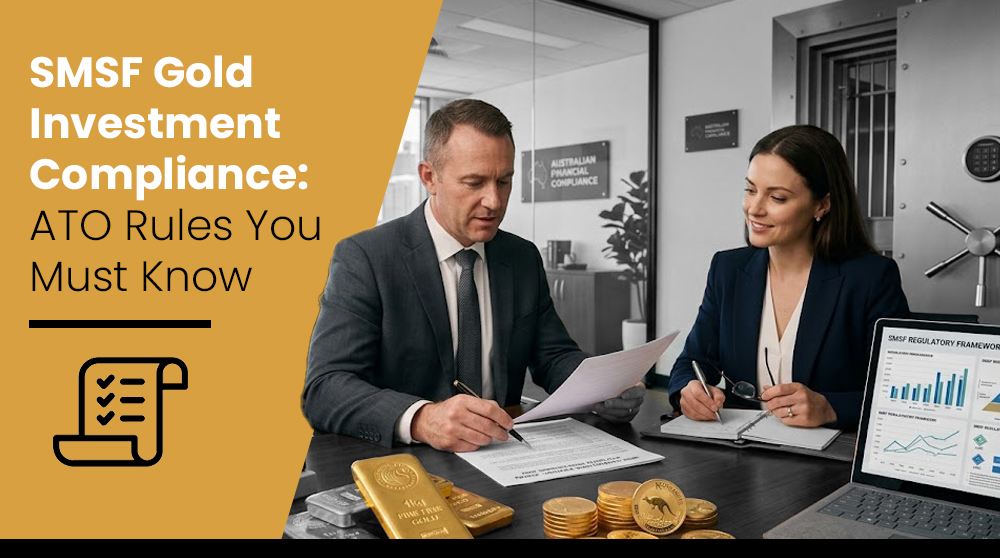
More Australians are planning to invest in gold as part of their super, especially when the market feels uncertain. At first, it sounds simple, like you buy gold, hold onto it, and expect it to grow over time. But when you do this through a Self-Managed Super Fund (SMSF), there are a few important rules you need to be aware of.
An SMSF gives you full control over your investments, but it also means you are responsible for following the rules properly. To help you understand, here’s our 101 guide that explains those SMSF gold rules in a simple way, so you know exactly how it all works.
What Is an SMSF?
An SMSF, or Self-Managed Super Fund, is a type of superannuation fund that you control yourself. Instead of your retirement savings being managed by a large fund, you make the investment decisions as a trustee.
This gives you more flexibility over where your money is invested, including assets like shares, property, and physical gold. SMSFs are regulated by the ATO, which means every investment must follow clear rules and exist solely to support your retirement.
Can SMSFs Invest in Gold?
Yes, SMSFs can legally invest in physical gold, including bars and coins. The ATO (Australian Taxation Office), the government body that oversees taxes and superannuation, allows SMSFs to invest in physical gold. That means real gold bars and coins that you can hold in your hand are a completely legal and recognised investment for super funds.
One thing to note here is that the gold must be owned by the SMSF, not by you personally. It also needs to be stored, recorded, and managed in line with ATO guidelines.
What Type of Gold Is Allowed in an SMSF?
Not all gold products are suitable for SMSFs. Collectable coins and jewellery are treated differently from bullion and can trigger extra storage and use restrictions. Standard investment-grade gold bars and coins, the kind with a purity of 99.5% or higher from a recognised refinery, are approved. Many first-time buyers don’t realise there’s a difference, and end up with something that causes unnecessary headaches.
ATO Rules for SMSF Gold Investment
When it comes to SMSF gold rules in Australia, there are a few key things to keep in mind.
- The gold must be owned by the SMSF, not by you personally
Your SMSF is its own legal entity, meaning it exists separately from you as a person, in the same way a business does. When gold is purchased for the fund, it must be bought in the fund’s name, paid for with the fund’s money, and owned by the fund. You, as an individual, cannot buy gold personally and then call it an SMSF asset. The purchase has to happen correctly from the very first step, which means making sure your dealer invoices everything in the fund’s name.
- It must be completely separate from your personal belongings.
As per the current ATO rules, SMSF gold can be stored at home or any private property if you have proper documentation, including purchase records, storage details, insurance information, and evidence that the gold belongs to the SMSF and is being held separately as a fund asset.
The rule exists because the whole idea of superannuation is that the money is being saved for retirement, and keeping fund assets at your personal home might entice you to use them as per your instinct.
You can use a third-party vault or a bullion dealer that offers secure, dedicated storage. Your gold is held there in your fund’s name, properly documented and insured.
- It must be properly recorded and documented
Every gold purchase made through your SMSF needs to be properly documented. That means keeping the original purchase invoice in the fund’s name, records of where the gold is stored, insurance documentation in the fund’s name, and annual valuations showing what the gold is worth. Your fund is audited every year by an independent person, and that auditor will want to see these records. Without them, even a perfectly legitimate investment can look non-compliant on paper.
- It must fit within the fund’s investment strategy.
Every SMSF is legally required to have something called an investment strategy. This is like a written document that explains what the fund invests in and why those choices make sense for the people in the fund. If you buy gold but your investment strategy doesn’t mention it anywhere, you’re not following the rules, even if everything else was done perfectly. A lot of first-time buyers focus so much on the gold purchase itself that they completely forget about this document.
Before you buy gold, check your investment strategy and update it to include gold. It doesn’t have to be pages long, but it should clearly mention what the fund holds and why it makes sense. Your accountant can help you with this.
SMSF Gold Storage Requirements
This is one of the areas where a lot of people have questions, and it’s worth spending a bit of time on. Under the ATO’s rules for collectibles and personal use assets, your SMSF gold can be stored at home or any private property if you have proper documentation, including purchase records, storage details, insurance information, and evidence that the gold belongs to the SMSF and is being held separately as a fund asset.
- The gold must be stored with a third party, meaning a professional, independent storage provider. This could be a bank vault, a secure precious metals storage facility, or a reputable bullion dealer who offers allocated storage. Allocated storage means your specific gold, your actual bars or coins, is set aside and identified as yours, not pooled with other people’s gold.
- Whatever storage option you choose, it needs to meet a few practical requirements.
- The storage arrangement should be properly documented, meaning you should have paperwork that confirms the fund’s gold is held there.
- The gold should be covered by insurance in the name of the fund.
- And the storage provider should be able to give you regular statements or reports showing what’s held and its current value.
- This matters because when your auditor reviews your SMSF each year, they’ll want to see evidence that the gold exists, that it’s stored appropriately, and that it belongs to the fund. If you can’t produce that evidence clearly and easily, it can create problems for your fund’s compliance.
How do you actually buy gold through your SMSF?
If you’ve never done this before, the process might feel a bit uncertain. But it’s actually quite simple and easy to understand. Read on.
- Make sure your SMSF is properly set up first: Before purchasing anything, your fund needs to be established, have its own bank account, and have a written investment strategy in place that accounts for gold. If you’re not sure whether your fund is ready, your SMSF accountant or financial adviser can confirm this.
- Choose a reputable Australian bullion dealer: You should look for a dealer who has experience working with SMSF buyers, offers investment-grade certified gold, and can provide proper tax invoices in the fund’s name.
- Purchase the fund’s name. The invoice should clearly show the SMSF as the buyer, not you personally. The payment should come from the fund’s bank account, not your personal account.
- Collect and file all documentation. As soon as you receive your purchase invoice and any certificates of authenticity or purity, file them somewhere safe and accessible. These documents are what your auditor will ask for, so treating them carefully from day one saves a lot of trouble later.
- Arrange storage. Organise third-party vault storage in the fund’s name, and make sure you receive and keep all storage statements and insurance documents. Your storage arrangement should be documented before the gold arrives, not after.
Final thoughts
Gold is a solid and ideal investment part of a self-managed super fund when managed correctly. It’s stable, tangible, and has a long history of holding its value through all kinds of economic conditions.
Most issues come from simple misunderstandings. By learning the basics, keeping clear records, and choosing the right support, you can invest with more confidence and avoid unnecessary problems.
Please note that we’re not financial advisers, so we’ll always point you toward your accountant or adviser for questions about strategy and tax. But for the bullion products, the pricing, the documentation, and making sure everything is set up properly from the start, we’re here and happy to help.
Get in touch today!
1. Chermside (North Brisbane)
- Address: Chermside – Suite 5, 832 Gympie Rd, Chermside, Qld 4032, Australia
- Phone: 07 49 390 234
- Email: [email protected]
- Opening Hours: Monday to Friday: 9 am to 5 pm | Saturday: 10 am to 4 pm | Sunday: Closed
- Details: Located opposite Westfield Chermside, with parking available behind the building and easy access via Hamilton Road.
2. Sunnybank (South Brisbane)
- Address: Sunnybank – Level 1, Suite 6/409 Mains Rd, Macgregor, Qld 4109, Australia
- Phone: 07 2142 6862
- Email: [email protected]
- Opening Hours: Monday to Friday: 9 am to 5 pm | Saturday: 10 am to 4 pm | Sunday: Closed
- Details: Conveniently located in the heart of Sunnybank, easily accessible for residents.
3. Brownsplains (South-West Brisbane)
- Address: Browns Plains – Unit 3/3376, Mount Lindesay Hwy, Regents Park, Qld 4118, Australia
- Phone: 07 2142 6482
- Email: [email protected]
- Opening Hours: Monday to Friday: 9 am to 5 pm | Saturday: 10 am to 4 pm | Sunday: Closed
- Details: Situated along the Mount Lindesay Highway, this location serves the south-western suburbs of Brisbane.
Frequently Asked Questions (FAQs)
1. What are the ATO rules for investing in gold through an SMSF?
The ATO allows gold investment through an SMSF, but it must follow strict rules. Your fund must buy gold in its own name, store it properly, and ensure it is only held for retirement purposes.
2. Can an SMSF legally invest in physical gold bullion?
Yes, it is completely legal. Your SMSF can invest in physical gold, as long as it meets all compliance requirements and fits within your fund’s investment strategy.
3. What purity standards must gold meet for SMSF investment?
Gold should be investment-grade, which usually means high purity (around 99.5% or higher). Standard bullion bars and recognised coins are generally accepted.
4. Where must SMSF gold be stored according to ATO regulations?
SMSF gold must be stored securely and separately from personal assets. Most trustees choose professional vault storage because it meets compliance and audit requirements more easily.
5. Can I store SMSF gold at home or in a personal safe?
This is generally not recommended because it can make SMSF compliance much harder. If the gold is mixed with personal jewellery or belongings, it may become difficult to clearly show during an audit that the asset belongs only to the SMSF.
6. What are the penalties for non-compliance with SMSF gold rules?
If rules are not followed, the ATO can impose fines, penalties, or even make your SMSF non-compliant. This could affect the tax benefits of your retirement savings.
7. Do I need to insure gold held in an SMSF?
While not always mandatory, insurance is highly recommended. It protects your investment from loss or theft and also supports proper risk management within your SMSF.
8. How is SMSF gold valued for reporting and auditing purposes?
Gold is valued based on its weight and the current market price. This value needs to be updated regularly and supported with proper documentation for audit purposes.
9. Are there restrictions on the type of gold an SMSF can purchase?
Yes, SMSFs should stick to investment-grade bullion. Collectible coins, jewellery, or decorative gold items are usually not suitable and can create compliance issues.
10. What documentation is required for SMSF gold investments?
You need to keep clear records such as purchase invoices, ownership details in the SMSF’s name, storage documents, and annual valuation reports for audit purposes.
11. How does the ATO audit SMSF gold holdings?
Each year, an independent auditor reviews your SMSF. They check your documents, confirm ownership, verify storage arrangements, and ensure everything complies with ATO rules.