When people search for the current gold price, they will usually see a price quoted per gram or per troy ounce. It can be easy to assume that this is exactly what their gold jewellery, coin, or bar is worth. But one thing you should know is that the value of a gold item depends on a few things, mainly how much it weighs, how pure the gold is, and what the current market rate is.
Once you understand these three things, working out the basic value of gold becomes much easier. You also get a better idea of why the amount you receive when selling gold may be different from the price you see online.
To help you understand these three concepts better, here’s our 101 guide that explains everything you need to know about gold, weight, purity, and market price. Read on.
How Is the Price of Gold Calculated?
The simplest way to understand gold pricing is to look at three things:
Weight × Purity × Gold Rate = Estimated Gold Value
This is a simplified calculation, but it gives you a useful starting point.
For example, imagine you have a 10-gram piece of 18K gold jewellery. 18K gold is approximately 75% pure gold.
So, the first step is to work out how much actual gold is in the item:
10g × 75% = 7.5g of gold
If the current market rate for pure gold were A$200 per gram, the simple metal value would be: 7.5g × A$200 = A$1,500
Please note that this is an estimate based on the current gold market price. The amount you receive when selling your jewellery may be different, as gold prices can change throughout the day.
What Does Gold Purity Mean?
Gold purity tells you how much actual gold is in a piece of jewellery compared with other metals. Pure gold is naturally very soft, so it is usually mixed with metals such as copper or silver to make jewellery stronger and more durable. The more other metals are added, the lower the gold purity.
So when you hear terms like 18K or 14K, it’s not about quality in general. It’s about how much gold is inside.
- Higher purity means more gold
- More gold means higher value
Understanding Gold Karats
The purity of gold is expressed in terms of karats. The best way to understand karats is as levels on a scale. There’s a difference between 24 karat and 22 karat gold, as well as between other purity levels. Here’s a breakdown of each:
- 24K is almost pure gold.
- 22K is of very high purity.
- 18K is common in everyday jewellery.
- 14K contains less gold but is valuable nonetheless.
| Karat (K) | Gold Content | What It Means in Real Life |
| 24K | 99.9% gold | Pure gold. Very soft. Mostly used for bars and coins, not everyday jewellery. |
| 22K | 91.6% gold | Very high gold content. Common in traditional jewellery. High value. |
| 18K | 75% gold | Popular for fine jewellery. More durable than 22K because it contains more strengthening metals. |
| 14K | 58.3% gold | More durable jewellery. Contains less gold, so it has a lower value per gram. |
| 9K | 37.5% gold | Mostly alloy metals. Lowest gold content and payout. |
How Is Gold Measured?
Precious metals like gold, silver, and more are measured and weighed in grams when you’re selling them. Whether it’s a chain, ring, or a handful of old broken jewellery, the first thing your gold buyer in Brisbane does is place it on a scale and measure the weight in grams.
So if your gold bracelet weighs 20 grams, that’s the number used to calculate your payout.
What Is a Troy Ounce?
A troy ounce is the standard unit used globally to price gold. It’s what you will see on financial websites or in international markets. Now here’s the important part. A troy ounce is not the same as a regular ounce.
1 troy ounce = 31.1 grams.
That’s the benchmark worldwide for setting the gold price.
Troy Ounce vs Gram: What’s the Difference?
The difference between a Troy ounce and a gram is about scale. The Troy ounce is used for global pricing, while grams are one of the more widely used denominations for weighing gold. In Australia, most dealers and gold buyers use grams when they weigh your gold, especially for jewellery and smaller items.
Let’s understand it with a simple example. If the gold price is AUD 3,100 per troy ounce, that means: Per-gram value ≈ AUD 100 (since 31.1 grams = 1 ounce). So when you walk into a gold buyer in Brisbane, they’re using that per-gram value to calculate your payout. Here’s a table of comparison between troy ounce and per gram for your clarity.
| Factor | Troy Ounce | Gram |
| Usage | Used for global gold pricing | Commonly used for everyday buying and selling in Australia and around the world. |
| Measurement | 1 troy ounce = 31.1 grams | Smaller unit of weight |
| Who uses it | International markets, traders | Local gold buyers and sellers (e.g. Brisbane) |
| Pricing reference | Gold price quoted per troy ounce | Payout calculated per gram |
| Example (AUD pricing) | AUD 3,100 per troy ounce | ≈ AUD 100 per gram |
| Practical meaning | Sets the base global value of gold | Determines what you actually get paid |
How Gold Buyers in Brisbane Calculate Your Payout
Once the price is converted into grams, the actual calculation becomes quite simple. Your payout is based on three key factors: the weight of your gold in grams, its purity, and the current market rate.
For instance, if you bring in 10 grams of 18K gold, it’s important to know that 18K gold is 75% pure. If the current gold rate is around AUD 100 per gram for pure gold, your item effectively contains 7.5 grams of pure gold. That brings the base value to around AUD 750. From there, the final payout is determined, taking into account standard adjustments made by the buyer.
When this process is explained clearly by our staff at Cash Your Gold and done in front of you, it becomes much easier to understand and trust the final number.
What Is the Gold Spot Price?
The spot price is simply the live market price for one troy ounce of pure gold or silver. It is determined by major international trading markets, primarily London and COMEX, where precious metals are traded nearly 24/7. The price of precious metals keeps moving with demand and supply, as well as developments in the global economy.
Why does the spot price keep moving?
The prices of precious metals like gold and silver respond to market dynamics, including Central bank decisions, inflation data, AUD/USD exchange rates, global uncertainty, geopolitical tensions, investor sentiment, and more.
Once the global price is set, Australian dealers convert it to AUD at the current exchange rate. That’s why prices can change even if the metal itself hasn’t moved much: the Australian dollar shifts, and suddenly your metal is worth more or less.
How spot price shapes the final price you pay
Every dealer in Brisbane dealing with your precious metals, like gold or silver, takes the live market price of that metal into consideration. Apart from the live market value, several additional charges make up the spot price you receive from your gold dealer in Brisbane.
- Premiums
- Payment method fees: This includes:
- Surcharges may apply for card payments.
- Bank transfer or cash will usually keep prices the lowest.
Once you know how spot price works, you can:
- Follow price charts and identify patterns
- Know when the AUD helps or hurts your buying power
- Compare dealers correctly
- Avoid overpaying
- Build your investment strategy with intention
When you’re buying or selling your precious metals around Brisbane, comparing the premiums gives you a better picture of who’s offering real value. At Cash Your Gold, we offer you the best value on your precious metals based on the live market rate, so that you leave our store with absolute confidence and zero second thoughts.
We are one of the trusted gold buyers in Brisbane, offering you the highest possible payout on your gold or silver, in whatever form you choose to sell. Scrap, broken gold or silver pieces, jewellery, or vintage items- we deal in all.
How Do Current Market Rates Affect Gold Value?
The current market rate tells you what gold is worth in the market at that particular time.
For example, if the market rate for pure gold is A$200 per gram and you have 10 grams of pure gold, the simple market value would be around A$2,000.
If the market rate later rises to A$220 per gram, the same 10 grams would have a simple market value of around A$2,200.
Nothing about the gold itself has changed. The market price has changed.
This is why people often check the current gold price in Australia before selling. It gives them a better idea of where the market is sitting at that time.
For an up-to-date Australian reference, gold prices can be checked here on our Cash Your Gold website. The price shown can vary depending on whether you are looking at a market reference price, a bullion product price, or a buying or selling price.
How Can I Estimate the Value of My Gold Before Selling?
You can get a rough idea by finding out three things:
- 1. Weight: How many grams does the item weigh?
- 2. Purity: Is it 9K, 14K, 18K, 22K or another purity?
- 3. Current market rate: What is the current price of pure gold?
You can then use a simple calculation:
Weight × Purity × Market Rate = Estimated Gold Value
For example, if you have 10 grams of 18K gold:
10g × 75% = 7.5g of gold
If the current reference price were A$200 per gram:
7.5g × A$200 = A$1,500
Again, this is only a starting estimate. The actual amount offered when you sell can be different. A trusted gold dealer will always ensure that the calculations are fair and made easy to understand so you know what payout you receive and why.
Final Thoughts
Understanding gold pricing does not require you to know everything about the gold market. You really need to start with three basic things: weight, purity, and the current market rate.
Weight tells you how much the item weighs. Purity tells you how much of that weight is actually gold. The market rate tells you what gold is currently worth.
Once you understand these three points, gold pricing becomes much easier to follow. You can also understand why a 10-gram piece of 18K jewellery is valued differently from a 10-gram 24K gold bar, and why the price you see online may not be the same as the amount a buyer offers.
At Cash Your Gold, Brisbane sellers get honest valuations, clear explanations, and fast payment. No pressure. No hidden surprises. Just a straightforward way to turn gold into cash.
Get in touch
- 📞 Call: 1300 678 175
- 🌐 Website: cashyourgold.net.au
Or Visit
Our Brisbane stores
 North Brisbane
Chermside
Located opposite Westfield Chermside, serving Chermside and surrounding North Brisbane suburbs.
- Address Suite 5, 832 Gympie Rd, Chermside QLD 4032, Australia
- Phone (07) 49 390 234
- Email [email protected]
- Hours Monday to Friday: 9 am to 5 pm | Saturday: 10 am to 4 pm | Sunday: Closed
 South Brisbane
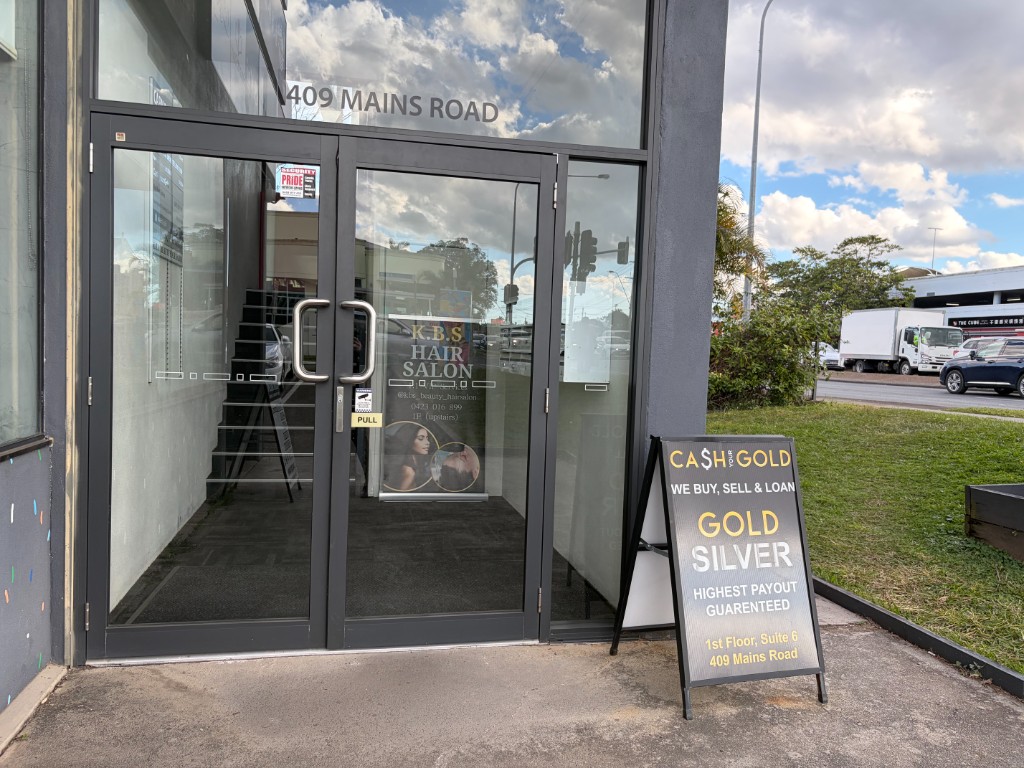
Sunnybank
Located on Mains Road in Macgregor, serving Sunnybank and surrounding South Brisbane suburbs.
- Address Level 1, Suite 6/409 Mains Rd, Macgregor QLD 4109, Australia
- Phone (07) 2142 6862
- Email [email protected]
- Hours Monday to Friday: 9 am to 5 pm | Saturday: 10 am to 4 pm | Sunday: Closed
 Logan
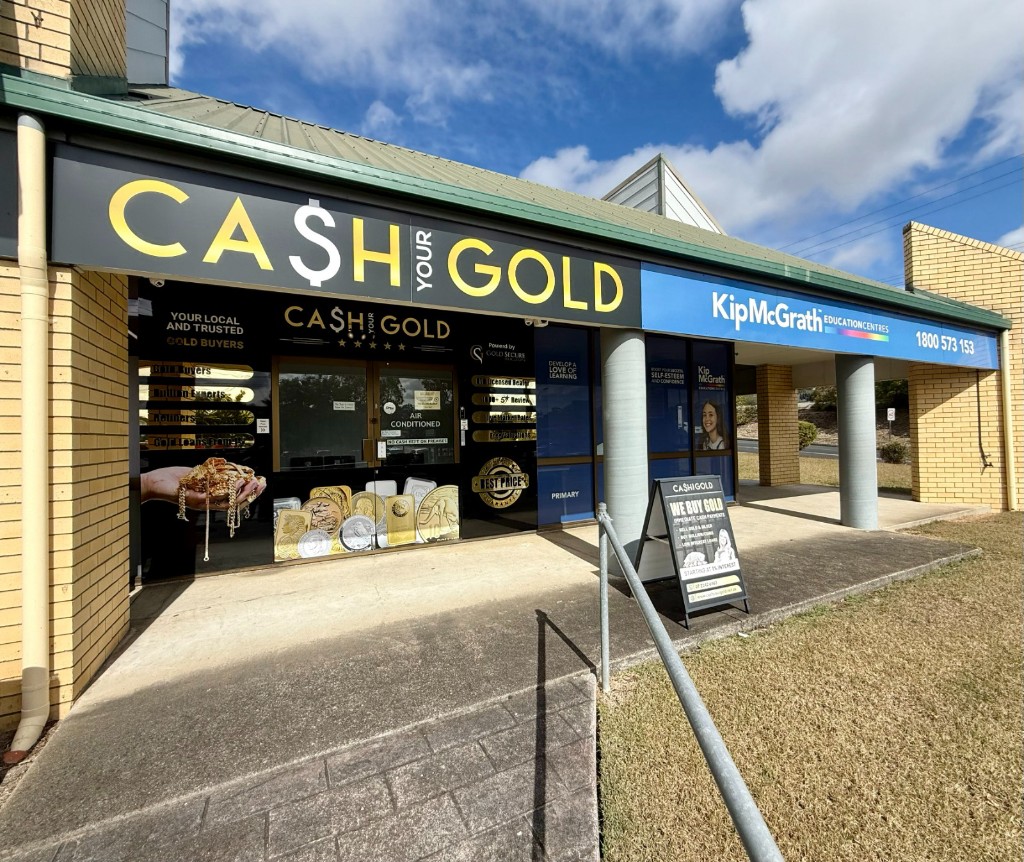
Logan
Browns Plains
Located in Regents Park near Browns Plains, serving Browns Plains and surrounding Logan suburbs.
- Address Unit 3/3376 Mount Lindesay Hwy, Regents Park QLD 4118, Australia
- Phone (07) 2142 6482
- Email [email protected]
- Hours Monday to Friday: 9 am to 5 pm | Saturday: 10 am to 4 pm | Sunday: Closed
Frequently Asked Questions (FAQs)
Q: How is the price of gold calculated?
A: Gold value is generally calculated using its weight, purity, and the current gold price. Together, these give you a good starting point for understanding what your gold may be worth.
Q: How does the weight of gold affect its price?
A: Weight is one of the main things considered when valuing gold. Generally, a heavier item contains more gold and may therefore be worth more, provided the purity is the same.
Q: What does gold purity mean?
A: Gold purity simply tells you how much actual gold is in an item. For example, 18K gold contains about 75% gold, with the remaining metal made up of other materials.
Q: What is the difference between 24K, 22K, 18K and 14K gold?
A: The difference is mainly the amount of gold each one contains. 24K is almost pure gold, while 22K, 18K, and 14K contain progressively more other metals.
Q: How do current market rates affect the price of gold?
A: Gold prices can change regularly, so the value of your gold can change with the market. A higher market price generally means your gold may be worth more, while a lower price can have the opposite effect.
Q: Why do gold prices change frequently?
A: Gold prices can move for several reasons, including changes in interest rates, inflation, currency movements, demand, and major events around the world.
Q: How is the value of gold measured?
A: Gold is usually measured in grams or troy ounces. Jewellery is commonly weighed in grams, while gold prices around the world are often quoted per troy ounce.
Q: What is the difference between grams and troy ounces?
A: A gram is a standard unit of weight, while a troy ounce is used specifically for precious metals. One troy ounce is approximately 31.1 grams.
Q: Does higher-purity gold have a higher value?
A: It generally can, as higher-purity gold contains more actual gold in each gram. The overall value will also depend on the item’s weight and the current market price.
Q: Is the market gold price the same as the price I receive when selling gold?
A: Not always. The market price gives you a useful reference, but the amount offered for your gold will depend on things such as its weight, purity, type, and the buyer’s current rate.
Q: How can I estimate the value of my gold before selling?
A: You can start by checking the item’s weight and purity and looking at the current gold price. This can give you a general idea of its value, although the final amount may be different after the item is assessed.