Barring short-term noise, we think the structural foundation of the gold rally has not changed.” — Suki Cooper, Precious Metals Analyst, Standard Chartered. “Gold prices are searching for a floor before they can focus on the next upside catalyst.”
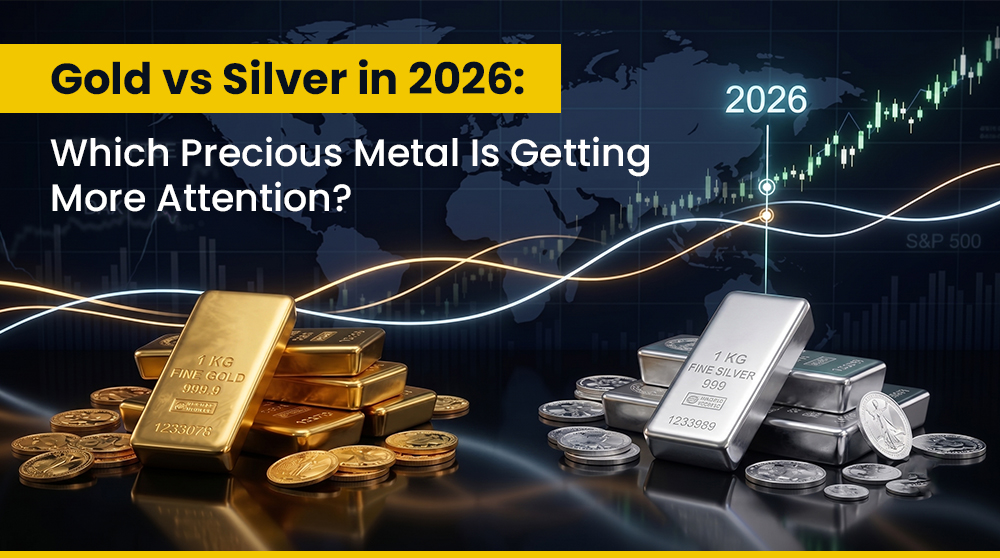
If you have been following prices of gold and silver this year, you have noticed that both precious metals have been getting a lot of attention. Gold started 2026 strong, then fell before moving up again. Silver has also had some big price movements and has been attracting more interest because it is used not only as a precious metal but also in many everyday products and technologies.
As of 31 August 2026, Kitco’s spot prices were around A$6,195 per troy ounce for gold and A$92–A$94 per troy ounce for silver. These are live market prices and can change throughout the day, so they should be treated as a guide rather than a fixed price.
So, which one is doing better in 2026? There is no simple answer. Gold and silver are both affected by global events, but they aren’t used in the same way. People buy gold as a store of value, while silver has major industrial uses. That difference is important because it can affect how the two metals behave when prices start moving.
Why Gold Is Gaining Attention
Gold has had a lot of attention in 2026, and there are a few simple reasons for this. When people are worried about the economy, inflation, government debt, or problems around the world, they often look towards gold because it has been used to hold wealth for a very long time.
Central banks are also buying gold. A central bank is simply the main bank that manages a country’s money and interest rates. Countries such as China have continued to add gold to their reserves, which means there is still strong demand from large institutions.
Gold has also had a fairly dramatic year so far. It reached a very high level in January, then dropped quite a lot before recovering again later in the year. This is a good example of why gold prices do not simply keep going up. They can move in both directions depending on what is happening in the economy and financial markets.
For Australians, there is another thing to keep in mind. Gold is normally priced around the world in US dollars, so the Australian dollar also affects the price we see here. If the Australian dollar becomes weaker against the US dollar, Australian gold prices can become higher even if the US dollar price of gold has not changed much.
Silver’s Extra Push from Industry
Silver is a little different from gold because it is used for more than just investment. It is used in solar panels, electronics, electrical equipment, electric vehicles and other products.
This means that people buy silver for two main reasons. Some people buy it because they want to own a precious metal, while businesses use it to make different products. If demand for these products grows, it can increase the demand for silver as well.
This can give silver more room to move when demand is strong. But there is another side to it. Silver usually moves around more than gold, which means its price can rise quickly but can also fall more quickly. That is something worth remembering if you are comparing the two. Silver may look more attractive when prices are rising strongly, but it can also come with bigger ups and downs.
Gold vs Silver Prices in Australia in 2026
If you’re looking at gold and silver for the first time, the difference in price can be surprising.
A troy ounce is the standard unit used to weigh precious metals. One troy ounce is about 31.1 grams.
The spot price is the current market price of the metal itself. It’s not necessarily the price you’ll pay for a physical bar or coin, as physical products can include costs such as manufacturing, distribution and dealer margins.
An indicative buy price is an estimate of what a dealer may pay you if you sell the metal back to them. It’s usually lower than the selling price because of the costs involved and the difference between the buying and selling prices.
For a simple view of the current market price, Kitco Metals provides live gold and silver spot prices. These reflect the market price of the metal itself, rather than the retail price of a physical product.
Kitco shows the market price of the metal, while the price of a physical bar or coin may be different.
What Is Supporting Gold and Silver?
There are still several reasons why people are paying attention to both precious metals.
- Gold continues to benefit from people and central banks buying it as a way to hold wealth. Concerns about inflation, government debt, and problems around the world can also increase interest in gold.
- Silver has another advantage because of the amount used by different industries. Solar panels, electronics, and other technologies all need silver, so demand can come from businesses as well as investors.
- There is also the question of supply. Gold and silver have to be mined, and increasing the amount being produced takes time. If demand grows faster than supply, it can put pressure on prices.
- None of this means that gold or silver prices are guaranteed to go up. Prices can fall as well, particularly if economic conditions change or demand becomes weaker. These are simply some of the reasons people are continuing to watch both metals closely.
Gold Price Forecast for 2026
Gold has had a very strong but volatile year in 2026. It reached a record high of around AUD$7,800 per ounce in January before falling back during the middle of the year. By September 2026, gold was trading at around AUD$6,100 per ounce in Australian dollars, although the exact price changes throughout the day. As of 23 September 2026, The Perth Mint’s live spot price was around AUD$6,070 per ounce on the bid and AUD$6,124 per ounce on the ask.
For the rest of 2026, most forecasts suggest gold could rise again, although there is a wide difference between individual predictions. Goldman Sachs Research currently forecasts gold to reach around AUD$6,960 per ounce by the end of 2026, based on its US$4,900 forecast. The London Bullion Market Association’s 2026 analyst survey has a more cautious average year-end forecast of around AUD$6,390 per ounce.
Some of the more optimistic forecasts are considerably higher. The LBMA’s 2026 survey includes analysts forecasting gold to reach as high as around AUD$8,200 per ounce during the year. More conservative forecasts are considerably lower, showing how difficult it is to predict exactly where gold will finish in 2026. These estimates can also change as the Australian dollar moves against the US dollar, because international gold prices are generally quoted in US dollars.
What stands out is that forecasts remain spread across a wide range rather than pointing to one certain price. The LBMA survey puts the average 2026 gold price at around AUD$6,500 per ounce, while its average forecast for the second-half high is around AUD$6,800 per ounce. Goldman Sachs’ year-end forecast is higher at approximately AUD$6,960 per ounce. These figures are forecasts rather than prices you can expect gold to definitely reach, particularly because both the gold price and the Australian dollar can move throughout the year.
Silver Price Forecast for 2026
Silver tends to move more sharply than gold because it has both investment demand and industrial demand. Its use in solar panels, electronics and other industrial applications continues to influence demand. That gives silver strong potential for price movements in either direction, but it also means the metal can be more volatile than gold.
Silver has also experienced significant price movements in 2026. As of 23 September 2026, The Perth Mint’s live Australian-dollar spot price was around AUD$91 per ounce on the bid and AUD$93 per ounce on the ask. Like gold, the price changes throughout the day depending on global market movements and currency exchange rates.
For the rest of 2026, predictions vary widely. The LBMA’s 2026 analyst survey puts the average silver forecast at around AUD$112 per ounce, based on its US$79 forecast. Individual analyst forecasts range from approximately AUD$71 to AUD$149 per ounce, which shows just how much uncertainty there is around silver’s price for the rest of the year.
J.P. Morgan is more conservative, forecasting silver at around AUD$89 per ounce in the fourth quarter of 2026, with an average of about AUD$99 per ounce for the full year. Other forecasts are more optimistic. A September 2026 BullionVault compilation of AI forecasts showed December predictions ranging from roughly AUD$75 to AUD$106 per ounce, while surveyed private investors were expecting silver to reach around AUD$114 per ounce.
Gold vs Silver in 2026: Simple Comparison
The table below compares the two precious metals across various metrics. It is designed to help you make an informed decision when buying or selling gold with Cash Your Gold. Read on.
| Factor | Gold | Silver |
| Main use | Holding wealth and investment | Investment and industrial use |
| Current Kitco spot price | ~A$6,087/oz | ~A$93/oz |
| Industrial use | Some | Very high |
| Price movements | Can be volatile | Usually more volatile |
| Central bank demand | Very important | Much less important |
| Used in technology | Some | Widely used |
| Often viewed as | A way to hold wealth | A lower-cost precious metal with industrial demand |
| Main thing to watch | Interest rates, inflation and uncertainty | Industrial demand, investment demand and supply |
What Could Influence Prices in 2026?
Investors surveyed at the end of 2025 believe the biggest drivers for 2026 will likely include:
- Geopolitical tensions: When there are conflicts between countries, trade disputes, or political instability worldwide, financial markets often become uncertain. In times like this, gold and silver have historically been seen as safe-haven metals, so demand often rises when global tensions increase.
- Government spending: When governments increase spending significantly, it can sometimes lead to concerns about rising national debt or long-term inflation. When people worry about the value of paper currencies in the future, they often turn to gold and silver as a way to protect their wealth.
- Monetary policy and interest rates: When interest rates are high, investors sometimes prefer interest-earning assets like savings accounts or bonds. But when rates fall or are expected to fall, gold and silver can become more attractive because their value often moves independently of traditional financial products.
- Inflation trends: Inflation simply means the rising cost of everyday goods and services. When inflation stays high for a long period, people often look for ways to protect the buying power of their money. Precious metals like gold have long been seen as a store of value, which is why demand often increases when inflation concerns grow.
- Currency movements: Gold and silver are traded globally, usually in US dollars. When currencies weaken against the dollar, the price of precious metals can rise in local markets. For Australian investors, movements in the Australian dollar can influence how expensive or affordable gold and silver appear locally.
If global uncertainty remains elevated, precious metals could continue to attract strong demand. On the other hand, if economic conditions stabilise and inflation cools significantly, price momentum may slow.
What This Means for Australians
Right now, most forecasts for 2026 are positive for gold, silver, platinum and palladium. Many experts believe gold could stay strong and even move above A$7,111. Silver may keep doing well if demand from industries such as solar and electronics remains high.
That said, no one can predict the market perfectly. We saw that in 2025, when prices rose much more than many experts expected. Things can change quickly, and markets do not always follow forecasts.
For people who buy gold or silver in Australia or buy other precious metals, this could mean an opportunity. If prices continue to rise, the value of what you are holding may increase. And if prices jump sharply, it might be a good time to consider selling while the market is strong.
Buying Gold and Silver from Cash Your Gold
At Cash Your Gold, we monitor live market prices to help you make informed decisions when buying gold and silver. Whether you are looking for bullion, coins or other precious metal products, our team can help you understand the available options, pricing and costs before you buy.
Our buying process is straightforward and transparent. We explain the current market price, product details and total cost upfront, with pricing linked to live gold and silver market rates. This means you can see what you are paying for and how the price is determined.
Why buy from Cash Your Gold?
Cash Your Gold combines live market pricing with a straightforward buying process and clear, upfront information. Our team is available to help you understand your options, so you can choose the gold or silver product that suits your needs and budget.
Get in touch
- 📞 Call: 1300 678 175
- 🌐 Website: cashyourgold.net.au
Or Visit
Our Brisbane stores
 North Brisbane
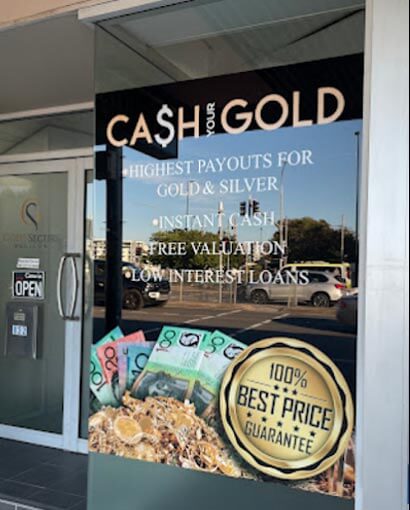
Chermside
Located opposite Westfield Chermside, serving Chermside and surrounding North Brisbane suburbs.
- Address Suite 5, 832 Gympie Rd, Chermside QLD 4032, Australia
- Phone (07) 49 390 234
- Email [email protected]
- Hours Monday to Friday: 9 am to 5 pm | Saturday: 10 am to 4 pm | Sunday: Closed
 South Brisbane
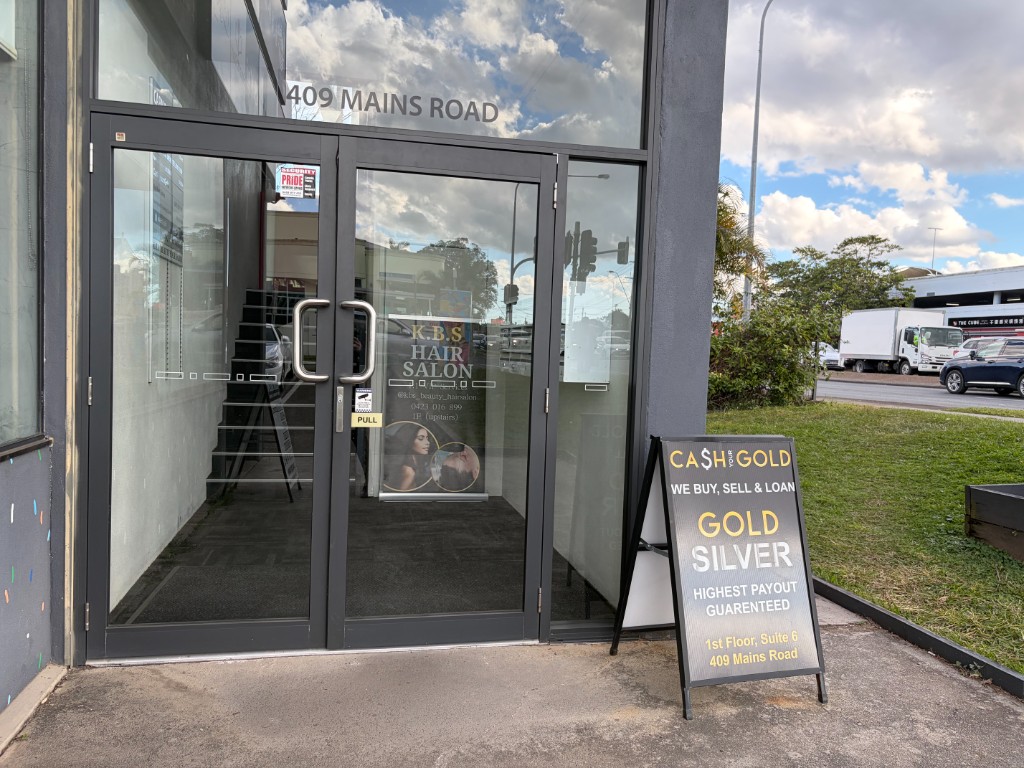
Sunnybank
Located on Mains Road in Macgregor, serving Sunnybank and surrounding South Brisbane suburbs.
- Address Level 1, Suite 6/409 Mains Rd, Macgregor QLD 4109, Australia
- Phone (07) 2142 6862
- Email [email protected]
- Hours Monday to Friday: 9 am to 5 pm | Saturday: 10 am to 4 pm | Sunday: Closed
 Logan
Logan
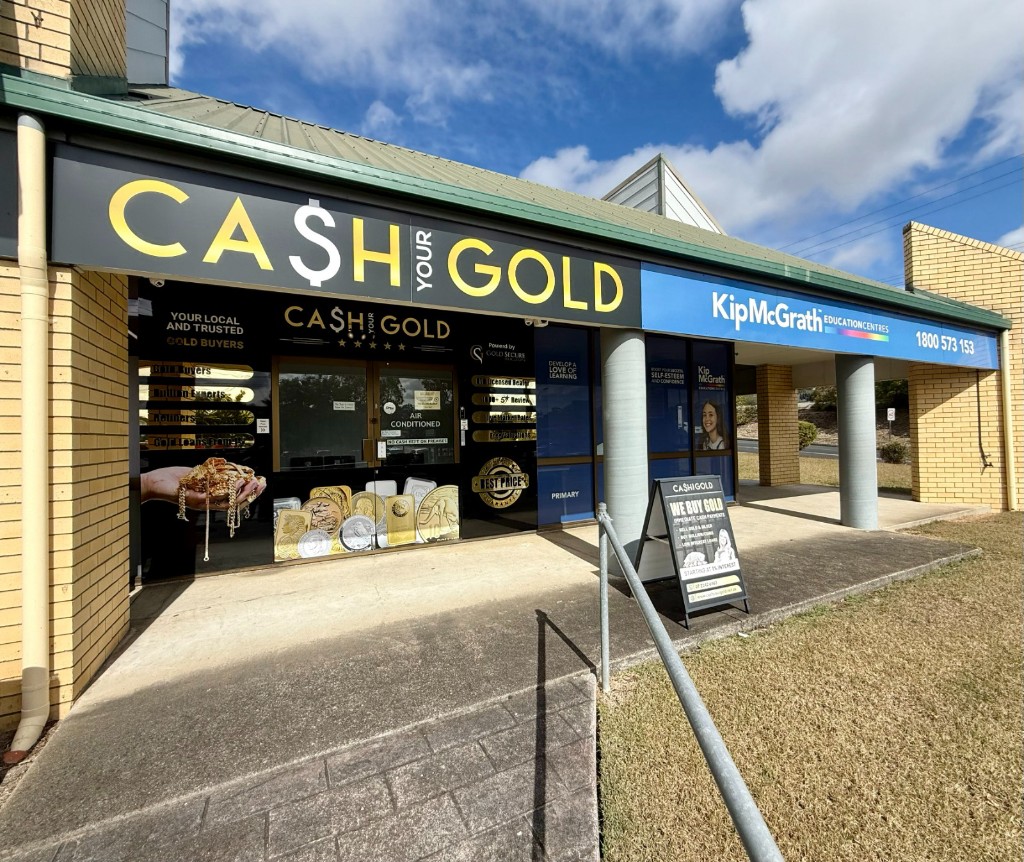
Browns Plains
Located in Regents Park near Browns Plains, serving Browns Plains and surrounding Logan suburbs.
- Address Unit 3/3376 Mount Lindesay Hwy, Regents Park QLD 4118, Australia
- Phone (07) 2142 6482
- Email [email protected]
- Hours Monday to Friday: 9 am to 5 pm | Saturday: 10 am to 4 pm | Sunday: Closed
Frequently Asked Questions (FAQs)
Q: Is gold or silver better in 2026?
A: There is no one answer. Gold is generally seen as the more established precious metal for holding wealth, while silver also has strong industrial demand. The right choice depends on what you want from the metal.
Q: Is silver getting more attention than gold in 2026?
A: Silver has been getting more attention because of its strong price movements and its use in industries such as solar energy and electronics. Gold, however, continues to attract strong demand from investors and central banks.
Q: What is the current gold price in Australia?
A: As of 31 August 2026, Kitco’s spot gold price was around A$6,195 per troy ounce. Gold prices change throughout the day as global markets move, so the live price may vary.
Q: What is the current silver price in Australia?
A: As of 31 August 2026, Kitco’s spot silver price was around A$93.50 per troy ounce. Silver prices change throughout the day as global markets move, so the live price may vary.
Q: Why does silver move more than gold?
A: Silver has a smaller market than gold and is also heavily used by industries. This means changes in investment demand or industrial demand can have a bigger effect on its price.
Q: Is silver cheaper than gold?
A: Yes, silver costs much less per troy ounce than gold. However, the lower price does not automatically mean silver is better value. The two metals have different uses and can behave differently when prices move.
Q: What affects gold prices in Australia?
A: Gold prices in Australia are affected by the international gold price, the Australian dollar, interest rates, inflation, global uncertainty and demand from investors and central banks.
Q: What affects silver prices in Australia?
A: Silver prices are affected by the international silver price and the Australian dollar, as well as investment demand, industrial demand, and the amount of silver available in the market.
Q: Can gold and silver prices fall in 2026?
A: Yes. Both metals can fall and rise. Changes in interest rates, investor demand, the economy, and other global events can cause prices to move in either direction.
Q: Is physical gold or silver a good investment?
A: Physical precious metals can be part of a wider investment plan, but they are not right for everyone. Before buying, it is important to understand the price, buying costs, storage, and the possibility that prices can fall.
Q: Where can I buy physical gold or silver in Australia?
A: You can buy physical precious metals from established bullion dealers and mints. Before buying, check the purity, weight, price, and any additional costs involved with the product.